The Reconnecting MacArthur Park Project is an initiative led by Councilmember Eunisses Hernandez to explore closing Wilshire Blvd to vehicular traffic. The project would unite the north and south sides of the park into a pedestrian-friendly, green community space.
The History
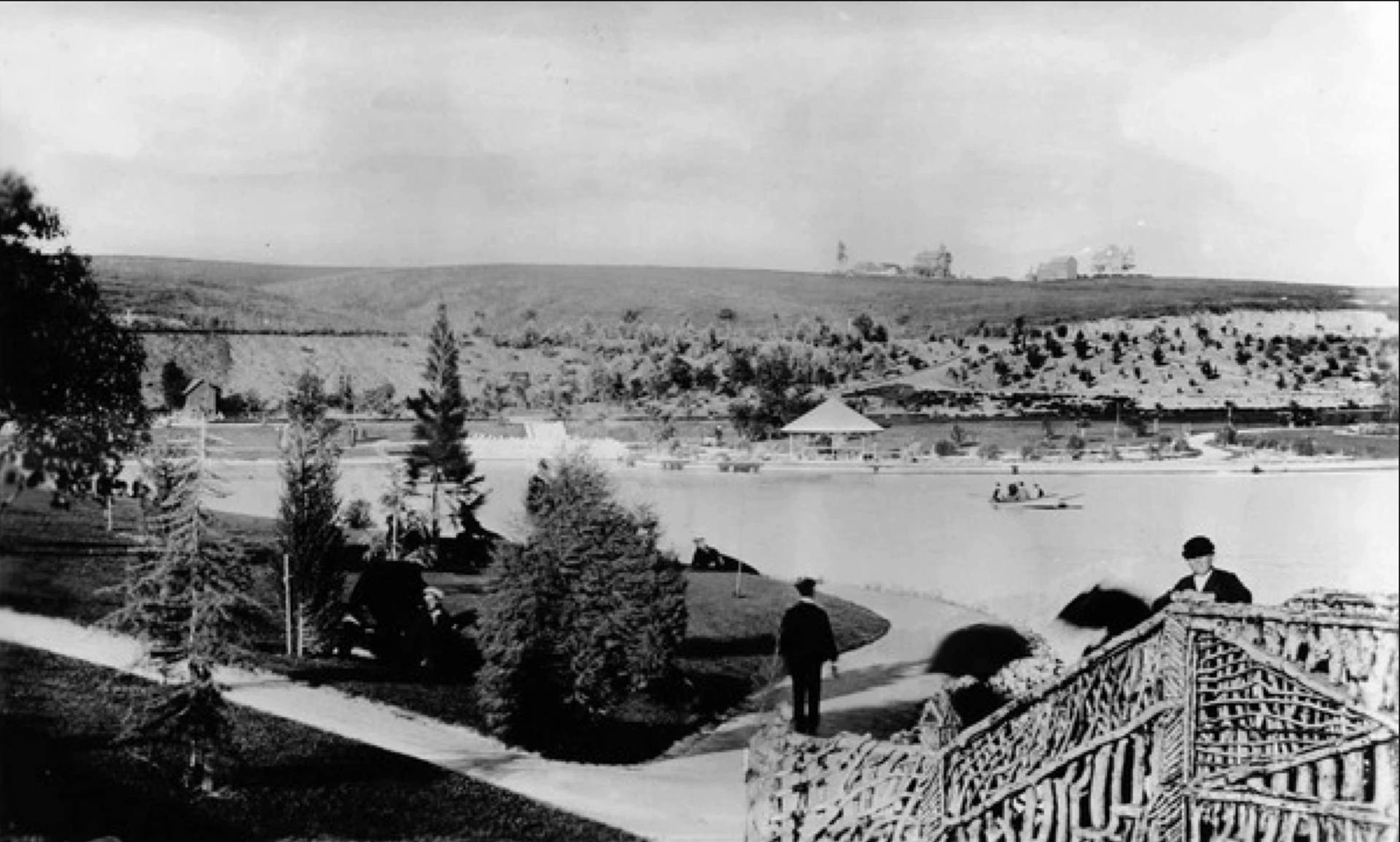
Initially named Westlake Park, MacArthur Park was built in the 1880s as an idyllic retreat. In 1934, before the I-10 freeway was built, the park was split by Wilshire Blvd to accommodate automobile travel from the coast and connect Westside neighborhoods to downtown. Today, the Westlake Neighborhood is one of the most transit-dependent and densely populated areas facing significant challenges:
- High-Injury Network (HIN): Four or five streets in and around MacArthur Park are part of the City’s HIN, which represents 6% of city streets but accounts for 70% of deaths and severe injuries involving pedestrians
- Limited Green Space: Only 0.5 acres of green space per 1,000 people, compared to the city's average of 8.9 acres
- Sparse Tree Canopy: coverage ranges from 4-18%, far lower than the city's average of 24%
- High Pollution Levels: Diesel particulate matter ranks in the 99th percentile nationally
- Health Disparities: High rates of obesity, diabetes, and heart disease, with a life expectancy ranking in the 98th percentile nationally
Prioritizing Quality of Life
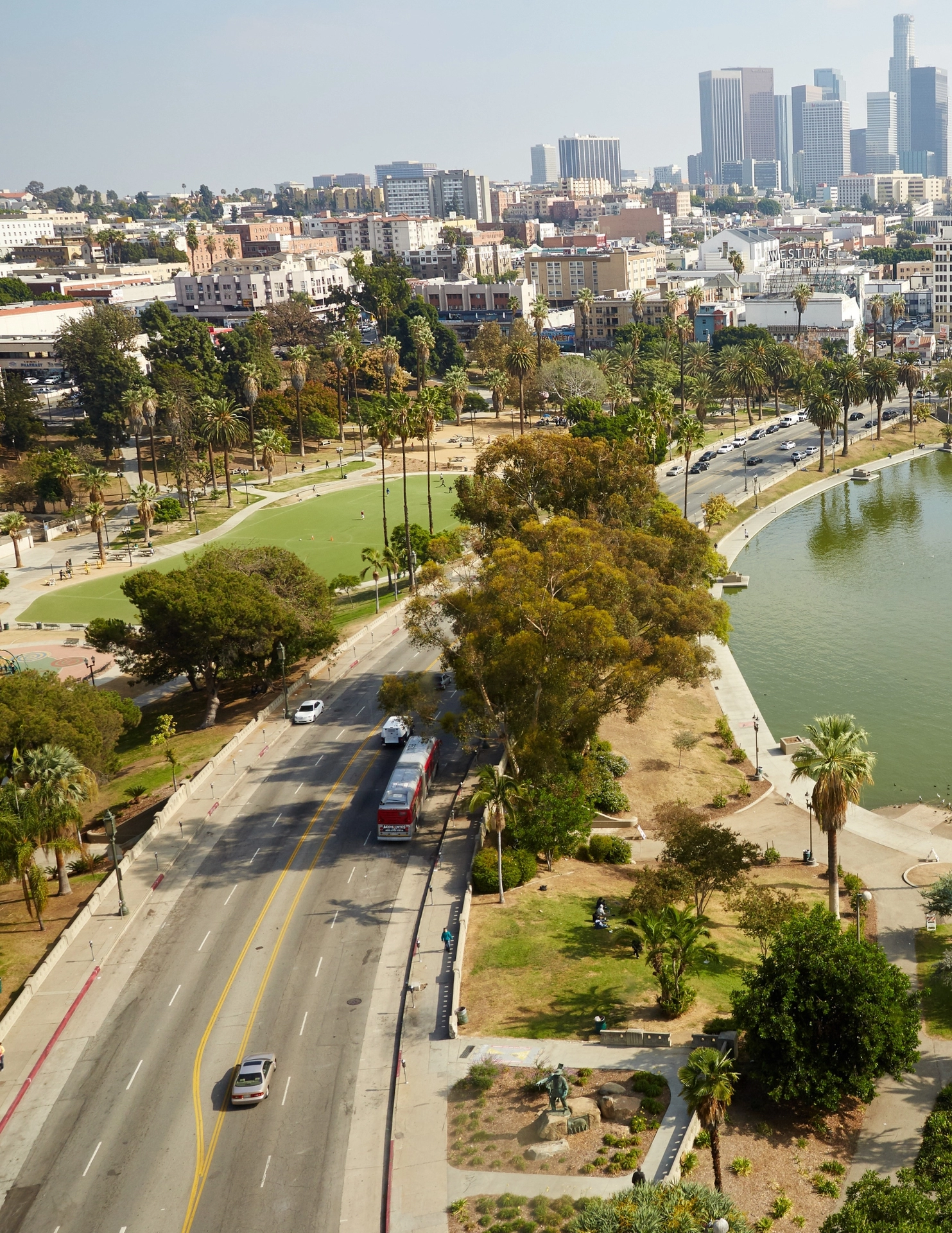
Longtime residents deserve better. The Reconnecting MacArthur Park Project is a chance to help address harms caused by car-centered infrastructure and put working-class families at the wheel of bringing investments into the Westlake neighborhood. Here is how it can positively impact their quality of life:
- Green spaces
Addresses the shortage of open spaces in the Westlake neighborhood
- Mobility
Creates L.A.’s first major pedestrianized street, prioritizing people over cars
- Climate Resiliency
Greenery will help mitigate the urban heat island effect and poor air quality caused by vehicles
- Improved Health
Sanctuary for physical activity and mental well-being, benefiting local residents
- Economic Development
Centers equity, which stems displacement, strengthens local economy, and improves economic stability
- Safety
Increases access to the park, schools, and community by making routes safer
VIDEOS
ADDITIONAL INFORMATION




Frequently Asked Questions
Find quick answers about the Reconnecting MacArthur Park project — what’s changing, why it matters, and how you can get involved.
Download FAQs
- 1. What is Reconnecting MacArthur Park?
Reconnecting MacArthur Park is a multi-phased project to reimagine the segment of Wilshire Boulevard through and adjacent to MacArthur Park, and create open space in one of Los Angeles’ most densely populated and diverse communities. This project has the potential to restore one of LA’s most historic parks as a welcoming place for people and families while improving neighborhood health through added green space, enhancing safety for people walking and rolling, and enhanced air quality.
Phase 1 of Reconnecting MacArthur Park is a joint project between the Los Angeles Department of Transportation (LADOT), Los Angeles City Council District 1 (CD 1), and Central City Neighborhood Partners (CCNP). This phase of the project is grant-funded by the Southern California Association of Governments (SCAG) and will end in Spring of 2026. Phase II of Reconnecting MacArthur Park is set to begin in 2026 and will be a joint project between the Bureau of Engineering, the Department of Recreation and Parks, CD 1, and CCNP and is funded by the US Department of Transportation.- 2. Why does Wilshire Blvd need to be reimagined?
The construction of Wilshire Boulevard in 1934 split both MacArthur Park and Lafayette Park, and created a physical barrier in the community. Today, Wilshire Boulevard is considered a dangerous street for biking and walking, with a high concentration of traffic collisions, injuries, and deaths. There is a high number of schools in the area and the surrounding streets are ranked by Vision Zero as the least safe to travel in the City of Los Angeles. The majority of schools do not have onsite green space, making the park a vital place for children to play. Since 2023, there have been ten crashes near the park resulting in severe injuries for people walking and bicycling. Reconnecting the park will create 2.3 additional acres of open space in one of LA’s most park-poor and overcrowded neighborhoods, and allow for more activities and amenities people want in the park.
- 3. What decisions have been made about the project?
None, this is the very beginning of the process and it starts with your feedback. The project is in the early concept design stage to study full and partial closures of Wilshire Boulevard between Alvarado Street and Carondelet Street. A Community Advisory Committee (CAC), composed of Westlake residents and stakeholders, continues to meet monthly to identify the needs of the community and craft a vision for what the closure could look like. CAC meetings are every 4th Wednesday at 5PM via Zoom and public comment on the project can be made at the meeting. At this stage, the project team and the CAC are looking at many possible options for Wilshire Boulevard and MacArthur Park, and no single concept has been chosen yet.
- 4. What efforts are taking place to improve the park now?
The office of Councilmember Eunisses Hernandez is addressing challenges within MacArthur Park, including homelessness, public safety, cleanliness, and public health. Initiatives led by CD 1 aim to enhance the quality of life for residents and visitors while preserving the park’s role as a vital community space. For more information, visit https://cd1.lacity.gov/MacArthur-Park.
- 5. When will changes take place?
The estimated timeline for the conceptual design, transportation analysis, and environmental impact analysis will continue through 2030. After these stages are complete, the project may begin construction if the analyses and community engagement ultimately recommend a transformation of Wilshire Boulevard. Funding has been secured for the conceptual design and analysis phases, via grants from the US Department of Transportation and SCAG but additional funding to complete engineering designs and other required studies are needed before the construction of any proposed changes.
- 6. What’s going to happen to car and bus travel?
Survey findings for this project show that over 60% of MacArthur Park users travel to the park by walking, and this project would support safer walking connections while still allowing people to access the park by any travel mode. The project is considering options for re-routing vehicles and transforming the roadway for pedestrians to increase access to green space for neighborhood residents. We hope these transportation improvements will remove Wilshire Blvd, 6th St, and 7th St from the City’s High Injury Network. A team of transportation planners and traffic engineers are studying the impact of a potential closure for Wilshire Boulevard, and will release a report with their results. Though this project may impact car travel on Wilshire Blvd, neighborhood residents and visitors will still have sustainable east-west travel options including Metro B and D lines, Metro Bus on 6th St and 7th St, and nearby LADOT DASH buses. In the coming years, access to MacArthur Park will benefit from the Metro D Line extension, connecting downtown with the westside via Wilshire Blvd. The Metro D Line extension mirrors Metro 720 and 20 bus services. With this new high-capacity transit option, Metro is considering service changes to bus routes along Wilshire Blvd.
- 7. What are the next steps/considerations for this project due to existing
immigration enforcement activities? The wellbeing of the Westlake community and MacArthur Park users is our highest priority. Out of an abundance of caution for our immigrant neighbors, the project team decided to indefinitely postpone Community Boulevard Day (originally scheduled for June 21). As we navigate accelerating threats to the safety of our communities, we will carefully consider the feasibility of hosting large group gatherings and create protocols to safeguard dignity and respect for all participants. In the meantime, we’re finding alternative ways to engage with Westlake residents.
- 8. How can I give feedback?
Phase I is complete and a findings report is pending. Though the survey is closed, your voice still matters. For questions or updates regarding Reconnecting MacArthur Park, please email reconnectingmacarthurpark@laccnp.org.
STAY CONNECTED!
Be the first to know about new initiatives, community events, and opportunities to get involved in shaping the future of MacArthur Park. Subscribe to our biweekly newsletter!